Celebrating Culture: The Elegance of the Indian Groom's Wedding Attire
There's a moment in every wedding celebration that captures the essence of tradition and personal style, and for an Indian wedding, the groom's entrance is one of the most anticipated. The image of an Indian groom wearing traditional wedding attire is a powerful visual statement, rich with color, symbolism, and intricate detail. It's more than just clothing; it's a cultural narrative woven into fabric, a story of heritage that designers and creators can draw upon to add depth and authenticity to their projects. This visual language, particularly when distilled into a clean vector illustration, becomes a versatile and compelling design asset.
A Visual Symphony of Color and Detail
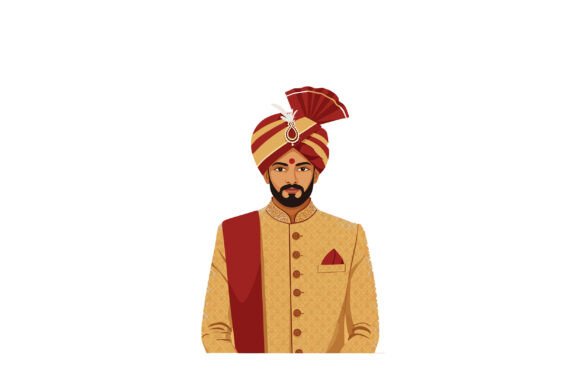
What makes this imagery so captivating? The foundation is often the sherwani, a long coat-like garment that exudes regality. In a shimmering gold fabric, it immediately draws the eye and conveys a sense of celebration and luxury. Paired with this is the turban, or pagri, a crucial element that varies in style and color across regions. A deep red turban, for instance, is classic and auspicious, often adorned with a decorative sarpech or a striking feather detail. This combination of gold and red is not arbitrary; it's a palette deeply embedded in Indian culture, symbolizing prosperity, joy, and new beginnings.
The calm mood of such an illustration is key. It presents the attire with dignity and grace, allowing the viewer to appreciate the craftsmanship—the fine embroidery (zari work) on the sherwani, the precise folds of the turban, and the subtle accessories like the necklace (kalgi) or stole. For a designer, this isn't just a clipart image; it's a study in cultural aesthetics. The vector illustration of an Indian groom in a gold sherwani and red turban with feather detail provides a scalable, clean-line representation of this elegance, perfect for applications where clarity and adaptability are paramount.
Practical Applications for Modern Creatives
So, how do you translate this rich visual into practical, real-world design projects? The beauty lies in its versatility. This asset isn't confined to wedding-specific contexts. Its themes of celebration, tradition, and sophistication make it a powerful tool for a variety of creative needs.
- Branding & Logo Design: For businesses catering to the South Asian market—a wedding planner, a boutique clothing store, a catering company, or a cultural event organizer—this imagery can become a cornerstone of brand identity. A simplified version can evolve into an elegant logo mark, instantly communicating the business's niche and cultural appreciation.
- Packaging & Merchandise: Imagine this illustration on the packaging for premium tea blends, artisanal spices, or luxury gift boxes. It elevates the product, suggesting quality and a story. For merchandise like tote bags, mugs, or apparel for cultural festivals, it serves as a proud and stylish graphic.
- Invitations & Editorial Layouts: Beyond wedding invitations, it can grace the pages of cultural magazines, event programs, or editorial features about heritage fashion. The calm, dignified style ensures it complements text without overwhelming it, adding visual interest and context.
- Digital Presence: From social media graphics announcing a cultural sale to website hero images for a heritage tourism blog, this illustration adds instant visual punch and thematic relevance. It can be used in digital products like printable art or e-card designs, offering customers a taste of cultural beauty.
Enhancing Your Design Strategy with Cultural Imagery
Incorporating culturally specific design assets like this requires a thoughtful approach. The goal is to enhance, not appropriate, and to communicate with clarity and respect. Here’s how to leverage such assets effectively:
First, consider visual consistency. If you're building a brand around South Asian aesthetics, using a consistent style of illustration—perhaps from the same artist or a matching set—creates a cohesive look across all touchpoints. This builds brand recognition and establishes a professional, curated feel. The downloadable ZIP file, with its included SVG, EPS, JPG, and PNG files, is a practical starting point, offering the flexibility to use the vector formats for scaling and the raster formats for quick digital use.
Next, focus on audience engagement. A well-chosen image does more than decorate; it connects. For a target audience that values tradition, this illustration can evoke nostalgia, pride, and a sense of belonging. For a broader audience, it introduces cultural richness in an accessible and beautiful way. Pair it with a complementary typeface—perhaps a clean sans serif font for modern contrast or a subtle serif font for a more classic feel—to complete the message.
Finally, always be mindful of the commercial licensing. Ensure the asset you use is cleared for your intended purpose, whether for a client project, a print-on-demand store, or a personal blog. A clearly licensed premium font or design asset saves time and legal headaches, allowing you to focus on the creative work.
Integrating Tradition with Modern Design Sensibilities
The true artistry in using a design asset like the Indian groom illustration lies in integration. It shouldn't feel like a pasted-on element but rather a harmonious part of the overall composition. Play with scale—use it as a bold central feature or as a subtle, repeating pattern in the background. Experiment with color overlays or monochrome versions to match your project's specific palette.
This is where understanding font pairing and layout becomes crucial. The intricate details of the illustration call for typography that can stand its ground or gracefully step back. A bold display font for headlines can match the sherwani's presence, while a legible body font ensures your message is clear. For projects like social media graphics or web design, where attention spans are short, the image's immediate cultural resonance can be a significant advantage, communicating a theme faster than words alone.
Ultimately, assets that depict Indian groom wearing traditional wedding attire are more than just decorative elements. They are gateways to storytelling, tools for building authentic connections, and means to celebrate cultural heritage in the commercial and creative spheres. By approaching them with intention, respect, and a keen design eye, you can create work that is not only visually stunning but also meaningful and resonant.